Muthea: A Handmade Script That Adds Character to Your Brand
Last week, I was sitting at my kitchen table with a stack of kraft-paper tags, a fresh pot of coffee, and a growing sense of frustration. I was updating the packaging for a small batch of handmade candles I sell online, and nothing I tried felt right. The clean sans serif I usually lean on looked too cold for the warm, imperfect scent notes I wanted to convey. The elegant serif I tried next felt stiff and overly formal, like it belonged on a wedding invitation rather than a soy wax candle jar. I needed something that felt human. Something with a little texture, a little warmth, a little personality. That is exactly the moment I remembered a font I had seen recently called Muthea, and I decided to give it a try. It turned out to be the missing piece I did not even know I was looking for.
What Makes Muthea Stand Out for Small Business Branding
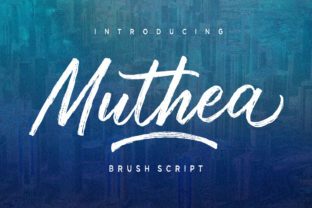
Muthea is a brushed texture font, and the first thing you notice is that it is clearly handmade. The letters have an irregular baseline, which means they do not sit perfectly flat on an invisible line the way a typical digital font does. Instead, they bounce and shift ever so slightly, as if someone painted them by hand with a wide brush and a steady but relaxed motion. That irregularity is not a flaw. It is the whole point. For a small business owner trying to build a brand that feels approachable and authentic, that human quality is gold. It tells customers that there is a real person behind the products, not just a template.
When I tested Muthea on a candle label mockup, the effect was immediate. The name of the scent, written in Muthea, looked like it had been hand-lettered on the jar with ink. It gave the product a boutique feel without requiring me to actually hand-letter each label. For a small operation like mine, that saves hours of work while still delivering that artisanal look. The texture in the strokes adds a tactile quality even on a screen, which is surprisingly hard to achieve with standard script fonts.
From Product Labels to Social Media Graphics
Once I saw how Muthea performed on a label, I started testing it across other customer-facing materials. I used it for the main headline on a new thank-you card that goes into every order. The card now feels like a small piece of art rather than an afterthought. Customers have actually mentioned the cards in reviews, which never happened before. That is the kind of ripple effect a thoughtful font choice can create. It is not just about looking good. It is about making every touchpoint feel intentional.
I also updated my Instagram story templates. Muthea works beautifully for short phrases like “new batch,” “back in stock,” or “thank you.” Because the font has such a strong personality, you do not need a lot of decoration around it. A simple background, a short line of text set in Muthea, and your message is clear and memorable. For small business owners who do not have a graphic design background, that simplicity is a huge relief. You can create polished-looking social media graphics in minutes without overcomplicating things.
For logo design, Muthea is best used as a display element rather than for long blocks of text. It shines in short, impactful settings. A bakery could use it for the word “bread” on a chalkboard-style menu or for the name of a signature pastry on a box. A skincare brand could use it for a product line name like “rose + clay” on a label. A boutique could use it for a store name on a shopping bag or a hang tag. The key is to let Muthea be the star and keep everything else simple.
How Typography Shapes First Impressions and Trust
Typography is one of those things that customers notice subconsciously before they notice it consciously. When someone picks up a product, their brain registers the style of the lettering long before they read the actual words. That first split-second impression can determine whether they perceive the product as cheap or premium, careless or thoughtful, generic or unique. Muthea lands squarely on the thoughtful and unique side of that equation. Its brushed texture and handmade feel signal effort and care. It says someone took the time to make this, which is exactly the message small businesses want to send.
That trust factor matters a lot for online sellers, where customers cannot physically touch the product before buying. If your product images show a label or package with a font that looks generic or poorly spaced, it raises doubt. If the typography looks considered and distinctive, it builds confidence. When I swapped my old label font for Muthea, I noticed a small but meaningful uptick in engagement on my product listings. People were spending more time looking at the images. That extra second of attention can be the difference between a browse and a purchase.
Readability and Practical Use Across Materials
One concern I had before committing to Muthea was whether it would be readable at small sizes. Some textured brush fonts turn into an unreadable mess when you scale them down. I was pleasantly surprised here. Muthea holds up well on a standard 2-inch by 3-inch label. The letterforms are open enough that they remain legible, and the irregular baseline actually helps because it gives each letter breathing room. On mobile screens, the font reads clearly for short headings. I would not recommend it for body text or long paragraphs, but for display use, headlines, and short lines, it is perfectly functional.
For printed materials like business cards, menus, and flyers, Muthea adds a tactile, handcrafted feel that stands out against the sea of clean, sterile fonts. If you run a café or a bakery, consider using it for the main item names on a menu board. Pair it with a clean sans serif for the descriptions and prices, and you have a menu that feels curated and inviting without being hard to read. For thank-you cards, stickers, and packaging inserts, Muthea adds that personal touch that makes customers want to keep the packaging instead of throwing it away.
Simple Font Pairing Ideas That Work
Muthea has a strong personality, so choosing the right companion font is important. You want something that supports it without competing. Here are a few pairings I tested and found effective:
- With a clean sans serif like a standard geometric font or a simple humanist style. The contrast between the rough brush texture of Muthea and the smooth simplicity of a sans serif creates a balanced, modern look. This works well for product labels where you need both a decorative headline and readable information like ingredients or scent notes.
- With a subtle serif for a more editorial or refined feel. A light or regular weight serif can ground the playfulness of Muthea and give your brand a slightly elevated, thoughtful tone. This combination is great for business cards or packaging for premium products.
- With another script or handwritten font only if you are very careful. Two script fonts together can quickly become chaotic. If you do try it, make sure the second script is much simpler and smaller, used only for a secondary line like a tagline or a location name.
In my own branding, I paired Muthea with a simple sans serif for the body text on my labels and website banners. That combination gives me the handmade charm I want without sacrificing clarity or professionalism.
What to Check Before You Start Designing
Before you download and start using Muthea in your business materials, there are a few practical things to check. First, look at the file formats included. Most font files come in OTF and TTF formats, which work across major design software. If you plan to use the font on a website or in a digital tool like Canva or Shopify, make sure it is compatible with those platforms. Second, check whether the font includes alternates, ligatures, or multiple weights. Some script fonts offer stylistic alternates that give you flexibility with letter combinations, which is helpful if you are designing a logo and want to avoid duplicate letterforms looking identical.
Third, and most important for any business use, verify the commercial font licensing. Using a font for personal projects is one thing, but if you are putting it on product labels, packaging, merchandise, client work, or digital downloads, you need a license that covers commercial use. Muthea, like many premium fonts, is a commercial font. Read the licensing terms carefully to understand what is allowed. This step protects your business and respects the work of the type designer. It is worth investing in the proper license from the start rather than running into issues later.
Muthea is not a font you want to use for everything. It is not a workhorse typeface for body copy or long emails. But as a display font, a branding accent, and a tool for adding soul to your customer-facing materials, it is one of the most effective options I have tested in recent months. For small business owners who want their brand to feel handmade, approachable, and memorable, Muthea is worth a close look.